
Webinar Series | Real Life Research Institute

Chokepoints and Consequences: How Hormuz and Bab el-Mandeb Are Reshaping the Horn of Africa's Economy and Security

Location: Online | Friday, August 28, 2026

Ottawa (EDT): 9:00 am – 10:30 am | South Africa (SAST): 3:00 pm – 4:30 pm | Kenya / Ethiopia (EAT): 4:00 pm – 5:30 pm | Cameroon/Nigeria (WAT): 2:00 pm – 3:30 pm

Webinar recording

Watch the full session from Friday, August 28, 2026.

Peacebuilding

Webinar reflection

Solomon Kimaita, moderator of this webinar, examines how disruptions at Hormuz and Bab el-Mandeb are affecting fuel prices, food security, and regional stability in the Horn of Africa.

Read the blog

Webinar overview

Two of the world's most contested waterways, the Strait of Hormuz and the Bab el-Mandeb, sit at the edge of a widening war economy, where their disruption is not a distant Middle Eastern problem but a direct hit on fuel prices, food security, and fragile regional peace in the Horn of Africa (HoA). Following strikes on Iran that set off a chain reaction in global shipping, Iran declared the Strait of Hormuz closed to “unfriendly” vessels, and despite a brokered ceasefire and subsequent Memorandum of Understanding, tanker strikes and renewed bombardments returned the waterway to crisis by July. Roughly a fifth of the world's oil and liquefied natural gas normally passes through Hormuz, causing shipping volumes through the strait to collapse by more than nine-tenths since February.

The crisis has now spread directly to the Bab el-Mandeb Strait, the 29-kilometre gateway between the Red Sea and the Gulf of Aden situated between Yemen and the HoA, where Yemen's Houthi movement declared a full naval blockade of Saudi Arabia and moved missiles and drones into position. Because shipping vessels divert south around the Cape of Good Hope or attempt the Suez route when Hormuz is unstable, traffic and risk are heavily concentrated along the HoA's coastline in countries like Djibouti, Somalia, Eritrea, and Sudan. When Houthi missiles or Iranian mines make this corridor unsafe, the HoA does not merely watch a crisis unfold offshore; it becomes the crisis's shoreline.

The disruption carries heavy economic costs, most immediately on energy security as Brent crude pushes past $100 a barrel and exposes HoA states that import the bulk of their refined fuel to severe price shocks that ripple into transport, electricity, and food prices. Furthermore, trade route disruptions raise insurance premiums and add significant fuel costs and transit delays, acutely exposing Djibouti's port economy, which handles the overwhelming majority of landlocked Ethiopia's trade, to reduced port revenues and higher import bills. Beyond the economic toll, the security implications compound through a heavier foreign naval presence along the HoA coastline, a potential resurgence of Somali piracy due to higher-profile distractions, and the risk of ideological and weapons trafficking spillover from Yemen into fragile HoA states.

With the Strait of Hormuz remaining a contested maritime corridor and Houthi attacks continuing to disrupt shipping through the Red Sea, this webinar brings out the critical relevance of how the disruption of these global trade routes is affecting security dynamics in the Horn of Africa and the region's economies.

Key webinar focus & objectives

Core focus

This webinar investigates how ongoing disruptions and naval blockades in the Strait of Hormuz and the Bab el-Mandeb Strait ripple into the Horn of Africa, driving fuel price spikes, food insecurity, trade delays, and regional security vulnerabilities.

Expected outcomes

Attendees will gain a comprehensive political economy analysis of how maritime volatility impacts import-dependent economies, port revenues, regional trade routes, and cross-border security dynamics.

Target audience

Geopolitical analysts, international relations and security experts, Horn of Africa economic specialists, policymakers, regional trade practitioners, and researchers.

This webinar is supported by the Peacebuilding & Inclusive Dialogues Team.

Speakers

  • Dr. Eric J. Irungu

    Speaker

    Dr. Eric J. Irungu

    Dr. Eric J. Irungu is a lecturer of International Relations and Diplomacy at Zetech University, Kenya. He holds a Doctor of Philosophy (PhD) in Political Science, specialising in International Relations from Moi University, Kenya; a Master of Arts in International Studies from the University of Nairobi, Kenya; and a Bachelor of Arts in Economics from Moi University, Kenya. He has a keen interest in Economic Diplomacy; International Economic Relations; International Development; International Politics; International Political Economy; Regional Integration; Strategic and Security Studies; Peace and Conflict; Violence and Armed Groups; Environmental Politics; and Climate Diplomacy. He has published and presented in conferences and webinars in the areas of maritime threats and security in the Red Sea and the Horn of Africa; ethics of lecturer-student relations in universities; artificial intelligence and political activism; climate change and environmental security; regional integration in Africa; economic diplomacy; digital diplomacy; conflict prevention and conflict early warning systems; application of artificial intelligence in international relations, diplomacy and conflict prevention; and social media and political activism among Gen Zs. He has fifteen years of teaching and research experience at the university level, having taught in programmes in International Relations, Diplomacy, Political Science and Development Studies.

  • Abdikarim Saed Salah

    Speaker

    Abdikarim Saed Salah

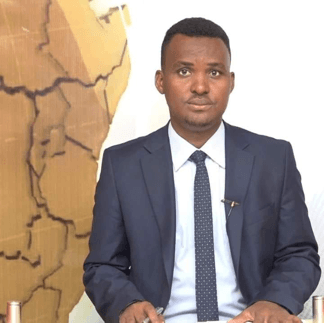
    Abdikarim Saed Salah is a journalist, editor, and geopolitical analyst specializing in the Horn of Africa, Red Sea geopolitics, and maritime security, and he is the Founder and Editor-in-Chief of HornPost.com. Raised in Berbera, he began his media career in 2006 and spent years as a television presenter, producer, and reporter for Horn Cable TV, covering foreign policy, regional security, and international relations. Holding a Bachelor of Arts in Journalism and Mass Communication alongside a Master of Arts in International Relations and Diplomacy, Abdikarim utilizes his academic background and decades of reporting experience to examine strategic competition, trade corridors, and how global developments impact the region's security and economic resilience.

  • Dr. Dawn Hersey

    Speaker

    Dr. Dawn Hersey

    Dr. Dawn Hersey is the Founder and Principal of Ferndon Consulting, where she specializes in geopolitical risk, security, strategic intelligence, and the resilience of critical infrastructure and supply chains. Her professional and academic work has focused extensively on Central Asia, the Middle East, the Horn of Africa, and Eastern Europe, examining how political instability, conflict, economic pressures, and regional competition affect security and international trade. Her experience in the Horn of Africa includes field research in Djibouti and Kenya, with particular attention to the strategic importance of the Red Sea, Gulf of Aden, Western Indian Ocean, and emerging trade corridors such as Kenya's Lamu Port. Her work examines the consequences of disruption at strategic maritime chokepoints, including the Strait of Hormuz and Bab el-Mandeb, and how these disruptions propagate through energy markets, transportation networks, food security, supply chains, and regional economies. Most recently, Dr. Hersey has been focusing on the interconnectivity of these key supply routes with the Arctic and West Pacific. Dr. Hersey's experience spans government, military, homeland security, academia, and private-sector consulting, informing her analysis of complex security environments. Her research and consulting emphasize identifying the often-overlooked connections between geopolitics, state stability, infrastructure dependencies, and commercial risk, translating those relationships into practical intelligence for decision-makers operating in uncertain environments.

Moderator

Solomon Kimaita

Moderator

Solomon Kimaita

Solomon Kimaita is an accomplished Lecturer of International Relations and Diplomacy at Zetech University in Nairobi, Kenya, specializing in Peace and Conflict Studies. He holds an M.A. in International Relations from the United States International University-Africa, and a B.A. in Social Studies – Government and Public Administration from Moi University in Eldoret, Kenya. Solomon's teaching portfolio covers topics such as Development Dynamics in Africa, Regional Integration, and International Conflict Management. He is a Certified Professional Mediator and has certifications in pedagogy and academic quality assurance. His experience spans significant roles in humanitarian work with UNHCR and project management with USIU's Development Partnerships in Higher Education Project. He has contributed to multiple academic conferences and published in peer-reviewed journals on emerging themes like AI in conflict prevention, youth participation in climate resilience and digital diplomacy. A committed academic, Solomon actively contributes to curriculum development and mentorship as the patron of the UNESCO Club at Zetech. His professional affiliations include membership in the Christian Professional Mediators Association of Kenya (CPMAK) and the International Relations Society of Kenya (IRSK).