
Two of the world’s most crucial maritime passages, the Strait of Hormuz and the Bab el-Mandeb, sit at the center of an expanding conflict. While these waterways are often viewed through the lens of Middle Eastern geopolitics, their closure or instability hits the Horn of Africa directly. Disruptions at sea translate into immediate price spikes at the pump, rising costs for basic food items, and new pressures on fragile regional stability.
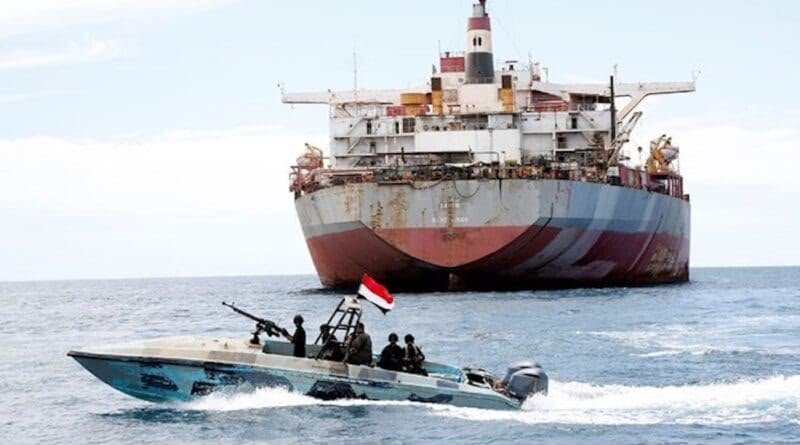
Image source: Eurasia review
A Region Caught Between Two Fires
On 28 February 2026, coordinated military strikes by the United States and Israel against targets in Iran set off a chain reaction that has redrawn the map of global shipping. Iran retaliated by declaring the Strait of Hormuz closed to “unfriendly” vessels, deploying naval mines, and launching direct attacks against merchant ships that defied its terms. Diplomatic efforts to halt the escalation produced short-lived agreements that rapidly unraveled the April Ceasefire and the 17 June Memorandum of Understanding (MoU). On 8 April 2026, Pakistan mediated a two-week temporary ceasefire between the United States and Iran. Intended to halt active hostilities and pave the way for reopening the strait, the agreement broke down almost immediately within days due to continued Israeli airstrikes in Lebanon, allegations of unauthorized vessel boardings by Iranian forces, and a subsequent retaliatory U.S. naval blockade on Iranian ports starting April 13. Following renewed diplomatic talks in Islamabad, U.S. and Iranian leadership signed a 14-point MoU establishing a 60-day framework for ending formal military operations, restoring freedom of navigation, and addressing sanctions and nuclear enrichment. However, because neither Israel nor regional armed groups were party to the document, hostilities persisted. The MoU collapsed entirely in early July when renewed tanker strikes in the Gulf triggered intensive U.S. aerial bombardment of Iranian military assets and coastal infrastructure along the strait.
The crisis has now spread directly to the Bab el-Mandeb Strait, the 29-kilometer gateway between the Red Sea and the Gulf of Aden that separates Yemen from the Horn of Africa. While Houthi forces previously focused on disrupting Israel-linked shipping in 2023 in response to the war in Gaza, their July 2026 declaration of a full naval blockade of Saudi Arabia a distinct tactical pivot. According to analysis by the Atlantic Council and the Foundation for Defense of Democracies (FDD), this latest move directly targets Gulf energy exports and retaliates against long-standing regional air and sea restrictions, rather than targeting redressed commercial traffic bound for Israel. In public statements, Islamic Revolutionary Guard Corps (IRGC) Quds Force Commander Esmail Qaani framed this alignment across both waterways as an emerging “resistance security belt” stretching from the Strait of Hormuz to the Bab el-Mandeb. By threatening Saudi Arabia’s Red Sea oil routes, the Houthis have opened a new operational front that tightens the squeeze on global energy transit and brings the maritime confrontation directly to the Horn of Africa’s doorstep.
Why the Straits Matter to the Horn
The strategic vulnerability of the Horn of Africa stems from its exposure to two distinct yet interconnected maritime corridors. Disruption at the Strait of Hormuz primary destabilizes global oil and gas supplies originating in the Persian Gulf. Because the Horn relies heavily on refined fuel and fertilizer imports routed directly from Arabian Gulf ports, instability in Hormuz immediately triggers local energy shortages, balance-of-payments pressure, and domestic price inflation.
Conversely, the Bab el-Mandeb Strait serves as the primary gateway connecting the Indian Ocean to the Red Sea and the Suez Canal. When security degrades at Bab el-Mandeb, commercial Asia-Europe container traffic and bulk cargo bypass the corridor entirely, diverting around the Cape of Good Hope. This rerouting does not drive traffic into the Red Sea; rather, it isolates coastal states like Djibouti, Somalia, Eritrea, and Sudan from vital trade flows. Siting directly along this high-risk zone, the Horn of Africa suffers a dual shock: soaring import costs from global supply chain diversions alongside localized security spillovers from active naval warfare.
The Houthis’ Red Sea blockade coincides with broader Middle Eastern hostilities, intelligence and defense analysts qualify the degree of direct command behind these operations. According to assessments by the Center for Strategic and International Studies (CSIS) and Chatham House, members of the Iran-aligned “Axis of Resistance”—spanning Hezbollah, Iraqi militias, and the Houthi movement operate through decentralized, opportunistic alignment rather than a rigid, centralized command-and-control hierarchy.
Within this framework, the Houthi movement maintains substantial operational autonomy, calibrating its maritime strategy to advance its own regional leverage while serving shared geopolitical goals. By targeting Red Sea trade and declaring a blockade on Saudi Arabia’s maritime routes, Houthi forces effectively apply asymmetric pressure on Washington and its Gulf partners, compounding global energy supply constraints along a maritime corridor that the Horn of Africa depends on for survival.
Horn of Africa’s Vulnerability and Security Spillover
This dual crisis hits the Horn’s fragile economies immediately at the local level. In Somalia, pump prices have surged by 150 percent (jumping from $0.60 to $1.50 per liter), driving up inland transport costs by up to 50 percent, while Sudan’s domestic fuel prices have climbed nearly 30 percent. Because Somalia imports over 90 percent of its food provisions and nearly a third of its fertilizer from the Gulf, these maritime bottlenecks have pushed local food prices up by 20 percent and caused essential water trucked into drought-affected zones to spike by over 2,000 percent per jerrycan. In Sudan, over half the population faces acute hunger disruptions to the 54 percent of seaborne fertilizer supplied by Gulf exporters threaten critical summer planting seasons and choke off life-saving humanitarian aid delivery.
Beyond economic strain, the security spillover is equally severe. Rather than operating under a rigid, centralized command-and-control structure, members of the Iran-aligned “Axis of Resistance” act through decentralized, opportunistic alignment; the Houthi movement’s July 2026 maritime blockade on Saudi Arabia represents a distinct tactical pivot aimed at Gulf energy routes, compounding regional pressures. Furthermore, as international naval task forces shift their focus away from routine counter-piracy patrols to escort commercial convoys and counter missile threats in the Red Sea, operational blind spots have emerged. According to ICC International Maritime Bureau data, Somali piracy-related incidents reached a 10-year high of 13 recorded events in the first seven months of 2026, with Pirate Action Groups using seized fishing vessels to extend their strike range into the Somali Basin.
Additionally, long-standing concerns over illegal weapons smuggling across the Red Sea become much harder to control during open naval warfare. Real-time maritime tracking provided by Vessel Tracking & AIS Data shows that as traffic fluctuates, the Horn of Africa risks shifting from a vital transit corridor into an active exposure zone, worsening displacement and humanitarian needs. Because the region directly borders these volatile waters, regional bodies like IGAD and national governments can no longer remainpassive observers. Protecting local economies requires a clear shift: integrating cross-strait risk into national economic planning, diversifying trade corridors, and establishing shared maritime surveillance. In a deeply connected global economy, instability at sea quickly becomes a crisis on land, making economic resilience and domestic security inseparable from maritime stability.
Region That Cannot Afford to Be a Bystander
The Red Sea and Bab el-Mandeb directly border the Horn of Africa, meaning offshore naval warfare translates almost instantly into inland economic shocks such as soaring fuel costs, lost port revenues, and prohibitive marine insurance premiums. Recent disruptions have demonstrated how deeply the region’s economies are tied to the security of adjacent maritime routes. An important lesson from this situation is that maritime security in the Horn of Africa can no longer be treated as a sectoral or naval issue alone. While regional governments have increasingly recognized the strategic importance of their maritime domain, recent developments suggest the need to further integrate maritime risk into economic planning, trade policy, and national security strategies. Building resilience in the region will require stronger maritime surveillance, greater regional cooperation, and diversified trade corridors capable of reducing the economic fallout of external shocks.