Adopted in June 2022 after several years of negotiations, the WTO Agreement on Fisheries Subsidies (AFS) is a game-changer for the fisheries sector around the world. The main tenet of the AFS is the prohibition of harmful fisheries subsidies that have, for far too long, promoted overfishing and overcapacity, depleting global fish stocks at unprecedented rates. In fact, more than USD 22 billion per year goes to fuel harmful fisheries subsidies that reportedly exacerbates illegal, unregulated and unreported (IUU) fishing, fishing of overfished stocks, and fishing in areas beyond national jurisdiction (the high seas). Member states, through the WTO, recognize the need to protect more than 38% of overfished marine fish stocks by empowering national governments and regional fisheries management authorities. Moreover, the prohibition of harmful fisheries subsidies which primarily benefit industrial fishing would provide tangible benefit for small-scale fisheries (SSF) through reduced competition, stock recovery and fair resources allocation.
How is the WTO positioning itself for impact?
Moving from diplomacy to real action, the WTO has established the Fisheries Funding Mechanism Trust Fund – commonly referred to as the WTO Fish Fund – a special voluntary funding mechanism for mobilizing resources to support countries’ readiness to implement the disciplines of the AFS agreements. So far, the Fish Fund, through contributions, commitments, and pledges from 18 WTO member states, has raised over USD 20 million. The fund is specifically geared towards supporting the implementation readiness of AFS disciplines for WTO members from developing and least-developed countries. While the WTO recognizes that some countries are ahead of others in implementation readiness, the Fish Fund has issued a call for eligible member states to apply for either Category 1 or Category 2 funding. Both funding categories aim to support countries in thoroughly assessing their national capacity and the legal and institutional frameworks that underpin their alignment and readiness to implement the AFS at different levels. Overall, the Fish Fund Theory of Change is anchored in empowering members to conduct thorough need assessments that translate into equitable and enforced domestic legislation and alignment with the AFS disciplines. This also includes improving understanding of the AFS in the country and supporting the development of a long-term, more ambitious strategic plan within the broader AFS framework.
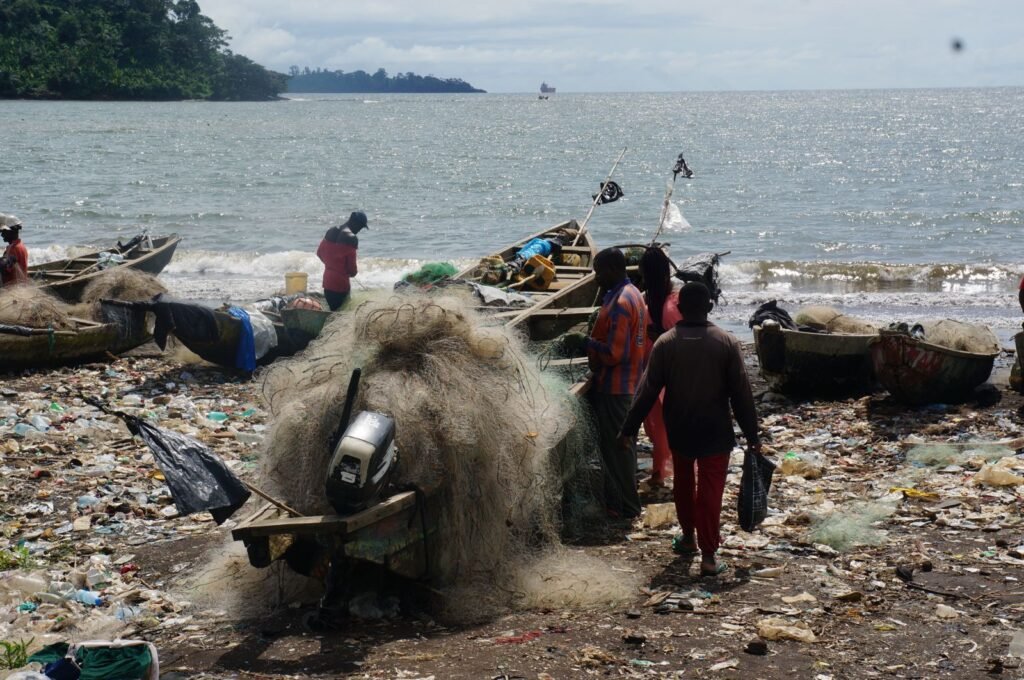
Picture: Small-scale fishers preparing their nets and boats for a late night fishing trip in Limbe, Cameroon (Source: Richard Nyiawung)
Why does this matter for small-scale fisheries (SSF)?
To date, the WTO Fish Fund, through its funding call, has awarded USD 2.9 million to support national baseline assessments of implementation readiness for the AFS disciplines for countries across South Asia, Africa, and Latin America. The funds are specifically open to national governments in developing and least developed countries to support activities through technical assistance, with the help of experts, to assess the alignment of existing fisheries subsidy policies with the AFS. Notably, in developing and least developed countries, SSFs account for more than 90% of global fish catch, with significant contributions from the most marginalized and resource-poor fishers and fishmongers. While SSFs’ contributions remain significant globally, for far too long, researchers and practitioners have advocated for equitable access to and benefits from marine and fisheries resources. Despite efforts such as the FAO Voluntary Guidelines for SSF to support due diligence and compliance of actors within the fisheries sector, implementation has varied widely across countries. In the Global South, SSF actors, due to poor legal and institutional fisheries governance frameworks, are those most exposed to the impacts of harmful fisheries subsidies that promote IUU fishing, fisheries conflicts, and marginalization.
| Coastal small-scale fisheries challenges in Cameroon, Central AfricaSmall-scale fisheries contribute enormously to food security and livelihoods for many Cameroonians. Cameroon has four major coastal marine fishing communities: Limbe, Kribi, Mabanda, and Youpwe. Since the early 2000s, the expansion of industrial fishing has caused rapid depletion of fish stocks and drastic changes in the livelihoods of SSF actors. Across all these communities, IUU fishing and ongoing conflicts between small-scale fishers and industrial vessels are constantly reported–although no appropriate actions are being taken. Ineffective fishery management has exacerbated the challenges of SSF actors. The country lacks a strong regulatory, institutional, and legal framework to support fisheries management, including a broader understanding of effective fishing methods and sustainability. As a signatory to the WTO Agreement on Fisheries Subsidies (AFS), Cameroon has the potential to support the design and implementation of policies that not only address the AFS disciplines but also policies that support, protect, and empower SSF actors. The Fish Fund Category 1 and 2 Funds could be leveraged in Cameroon to conduct a focused socio-legal audit of existing artisanal licensing and subsidy distribution, aiming to map out and legally resolve the ongoing conflicts between SSF and industrial vessels by creating ASF-compliant no-take zones and exclusive fishing areas for SSF. |
Where the WTO Fish Fund can leverage support
The Fish Fund implementation strategy provides new opportunities to better strengthen the management of fisheries resources within national jurisdiction. Through investment in national assessment of fisheries policies and governance frameworks across countries in the Global South, the WTO approach provided two opportunities. First, it creates opportunities for governments in countries with fisheries policies to reassess the challenges and loopholes in fisheries management, access, and equitable benefit-sharing amongst all actors, including SSF. Second, the WTO Fish Fund provides opportunities for countries without a clear fisheries governance framework to engage with stakeholders at multiple scales to develop and implement rigorous, efficient policy instruments that protect fisheries resources and the future of the fisheries industry. Overall, the WTO, through its defined Theory of Change, funding mechanism, and AFS disciplines, would be an important partner and opportunity for better transformation and enforcement of efficient fisheries management systems across countries with limited national capacity, including those with poor institutional and legal frameworks.
Potential hurdles for consideration
While the Fish Fund provides opportunities for changes in fisheries governance, there is a need to be prepared to overcome certain challenges/weaknesses. There are potential risks of additional institutional hurdles, in which national assessments could prioritize high-level industrial compliance over the complex, localized needs of SSF management and governance. Also, if new regulations require expensive compliance measures or detailed data reporting, SSF actors might face greater barriers to legal compliance than industrial actors. These challenges should be taken seriously to ensure an inclusive and empowering fisheries sector.
Author’s Bio
Dr. Richard Nyiawung is a Postdoctoral Fellow at the University of Waterloo in Canada, with extensive research and professional experience in fisheries and oceans policies and governance. He is a Research Affiliate at the Real Life Research Institute (RLRI), contributing seasonally to the organization’s Oceans Program activities. Richard is a member of the African and Adjacent Island States Ocean Decade Taskforce, IOC-UNESCO.
Dr. Maurice Beseng is a Teaching Fellow at the Department of Global Sustainable Development, University of Warwick, UK, with substantial research experience in maritime security governance, with a particular interest in the nexus between fisheries crime and ocean governance