Webinar Series | Real Life Research Institute

Linking Climate Adaptation and Health Access for Baka and Bantu Indigenous Communities in the Congo Basin

Location: Online | Friday, 27 November 2026

Ottawa (EST): 9:00 am – 10:30 am | South Africa (SAST): 4:00 pm – 5:30 pm | Kenya / Ethiopia (EAT): 5:00 pm – 6:30 pm | Cameroon/Nigeria (WAT): 3:00 pm – 4:30 pm

Background and context

Forest-dependent communities in Eastern Cameroon, particularly around the Lobéké, Dja, and Ngoyla corridors, face a compounding socio-ecological crisis where environmental degradation and health vulnerabilities inextricably feed one another. Supported by insights from the Forest Peoples Programme, Debates Indígenas, CIFOR, and Congo Landscapes, these indigenous Baka and Bantu populations rely heavily on the forest for sustenance, income, and traditional medicine, a dependence currently strained by shifting climates and industrial pressures such as the Mbalam iron ore project logging.

This dual crisis manifests simultaneously as a climate adaptation challenge, where unpredictable seasons disrupt farming and forest incomes while forcing Baka communities to travel farther for essential resources without adequate mechanisms to document environmental damage, and a severe health systems bottleneck. Households routinely depend on forest cash to cover basic medical and educational expenses, often resorting to selling forest products cheaply to middlemen during health emergencies, which locks them in chronic poverty.

Geographic isolation further exacerbates these divides, leaving remote Baka forest camps with near-zero prenatal care or childhood vaccination coverage as documented by UNICEF, while the simultaneous loss of traditional forest medicine deepens their healthcare deficit. Addressing these interwoven vulnerabilities requires an integrated framework uniting climate adaptation strategies for resilient, protected livelihoods with accessible primary health prevention.

Webinar focus & objectives

This webinar aims to explore how integrating climate adaptation and health systems can address the compounded vulnerabilities of indigenous forest-dependent communities in the Congo Basin, highlighting community-led monitoring, livelihood support, and grassroots health access.

This session centers on examining the complex, interlinked climate and health pressures confronting Baka and Bantu communities in Eastern Cameroon. It showcases practical, rights-based methodologies, including participatory risk mapping, community-based forest monitoring, and adherence to Free, Prior, and Informed Consent (FPIC) frameworks. Furthermore, the webinar discusses actionable strategies for supporting sustainable forest-based income generation to help communities break out of the middleman trap during critical health emergencies.

Expected outcomes

  • Increased regional understanding of the climate-health nexus in Congo Basin forest communities.
  • Shared insights on implementing participatory mapping, forest product support groups, and community health worker integration.
  • Enhanced cross-sectoral collaboration between conservation actors, health practitioners, and civil society organizations.

Target audience

Researchers, practitioners, civil society organizations, and policy-makers working across climate adaptation, public health, indigenous rights, and environmental conservation in Africa.

This webinar is supported by the Climate Adaptation & Resilience Team and the Health Systems, Equity, and Social Transformation Team.

Speakers

  • Nicodeme Tchamou

    Speaker

    Nicodeme Tchamou

    Nicodeme Tchamou is an Environmental Program Management Specialist with over 28 years of experience in natural resource management, biodiversity conservation, and sustainable development across Central and West Africa. He holds a Master of Science in Environmental Sciences, a postgraduate degree in Tropical Forestry, and a Bachelor’s degree in Botany. He has extensive experience designing, implementing, monitoring, and evaluating large-scale, multi-country environmental programs. His work includes managing regional grant portfolios, coordinating transboundary initiatives such as the One Health program in West Africa, and supporting civil society and community-based organizations to advance conservation outcomes. He has collaborated with major international partners, including WWF, WCS, COMIFAC, OSFAC, and regional NGO networks. Mr. Tchamou has held key positions with the International Institute of Tropical Agriculture, WWF (Cameroon and Gabon), and USAID/CARPE in Kinshasa, as well as USAID West Africa, where he contributed to programs such as the Upper Guinea Forest Ecosystems and biodiversity and climate initiatives. He is currently Chief Technical Advisor for the implementation of the GEF8 Dja Landscape Project. He is fully bilingual in English and French, with strong experience in cross-cultural collaboration and stakeholder engagement across diverse regional contexts.


  • Nyong Harrison Ndukong

    Speaker

    Nyong Harrison Ndukong

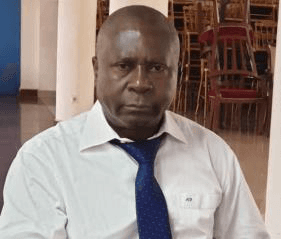
    Nyong Harrison Ndukong is a public health specialist with seven years of experience in laboratory networks and diagnostic access in Cameroon. He trained in medical laboratory science (BSc, University of Bamenda) and international public health (MSc, Liverpool John Moores University). He joined the Center for Research and Integrated Health Systems Strengthening (CRIHSS Foundation) in 2020 and spent four and a half years as Zonal Coordinator for the East Region, where the Lobéké, Dja and Ngoyla forests lie. He now runs the INTRASSAT project as Senior Coordinator for the Adamawa Region. The network he coordinates links over 90 health facilities in 12 health districts to testing laboratories, moving viral load, EID and TB samples and bringing results back to patients. He is part of the team writing integrated sample transport training modules for Cameroon’s Ministry of Public Health, and he is certified in diagnostic network optimization and event-based surveillance. CRIHSS Foundation named him Best Staff of the Year in 2020 and 2025.

  • Dr. Ghislain Tikeng Agoum

    Speaker

    Dr. Ghislain Tikeng Agoum

    Dr. Ghislain Tikeng Agoum holds a PhD in Environmental Geography and has over 13 years of professional experience in sustainable development across Central and West Africa. His expertise spans biodiversity conservation, climate change mitigation and adaptation, natural resource governance, and integrated landscape management within the AFOLU sector (Agriculture, Forestry and Other Land Uses). He has extensive experience supporting governments, development partners, and civil society organizations in ecosystem restoration, climate resilience, and sustainable land-use planning. Dr. Agoum is particularly committed to promoting the rights, participation, and socio-economic empowerment of Indigenous Peoples and Local Communities (IPLCs), while advancing gender equality and social inclusion in environmental governance. As an independent consultant, he has worked with several international organizations, including WBG, FAO, UNDP, WRI, GIZ, JICA, and COMIFAC, contributing to project evaluations, stakeholder engagement, policy analysis, and climate and biodiversity initiatives.

Moderator

Abigail Peace Nathaniel

Moderator

Abigail Peace Nathaniel

Abigail Peace Nathaniel is a graduate of Niger State School of Health Technology, Minna, and a Registered Community Health Worker with a strong commitment to community health education, women’s wellbeing, and purpose-driven living. She is a passionate women’s health advocate who believes that health challenges and difficult circumstances should not define a person’s identity or prevent them from pursuing their God-given purpose. Through health education and advocacy, she works to make reliable health information accessible, challenge harmful misconceptions, and encourage informed decisions about wellbeing. Abigail is the founder of Her Health and Wellness (HHW), a women-focused platform established to educate, empower, and inspire women to embrace holistic wellbeing. Through HHW, she promotes attention to spiritual, physical, emotional, and mental health, while encouraging women to understand their worth, grow in confidence, and live intentionally from a faith-informed perspective. She is also developing her work in the digital space as a health content writer, using clear and engaging communication to educate and reach women beyond her immediate community. With a heart for service and a passion for faith-based empowerment, Abigail’s mission is to equip women with knowledge, encouragement, and confidence to prioritize their wellbeing and pursue purposeful, balanced lives.