
Blogs
Cameroon Hosted the WTO’s Ministers - Were LDCs Able to Reshape the Rules?
Christelle Nfor and Chris Begealawuh, PhD
The world’s trade ministers just wrapped up four days of negotiations in Cameroon. Some agreements were reached; others were not. Here is what happened.
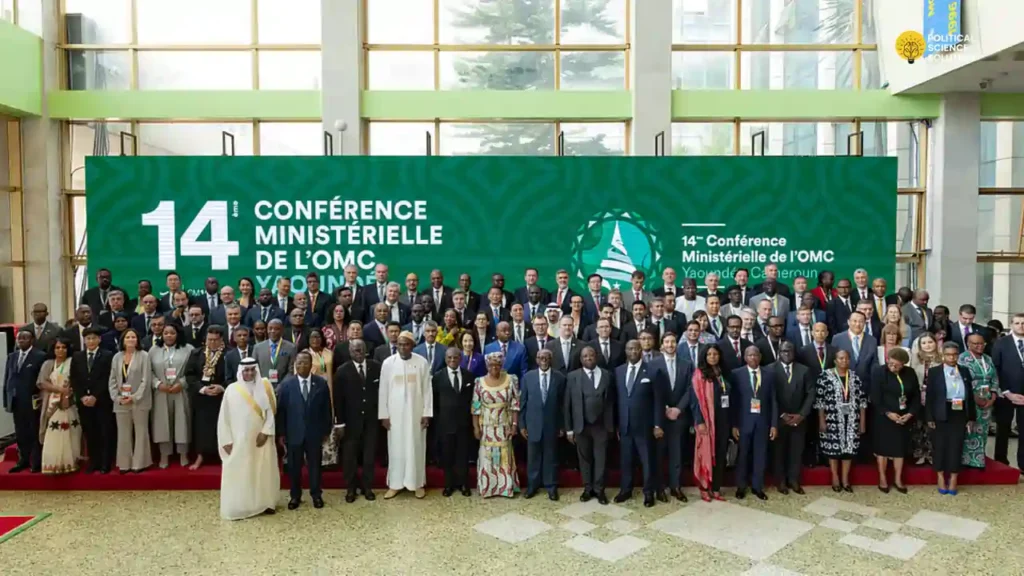
From March 26 to 30, 2026, the World Trade Organization (WTO) held its 14th Ministerial Conference – MC14 (the highest-level meeting the organization convenes), bringing together trade ministers and senior officials from across the world to discuss the future of international trade. Convening in Cameroon’s capital, Yaoundé, the talks took place at a time when rising tariffs and ongoing conflict in the Middle East are significantly disrupting global trade. The choice of Cameroon as host was itself significant. It demonstrated Africa's growing place in global economic conversations.
The conference tackled a wide range of issues, from digital trade and e-commerce, agriculture and food security, fisheries subsidies, development and special and differential treatment, investment facilitation, and the growing intersection of trade with climate and industrial policy. What resonated from the pre-recorded statements was a broad consensus that the WTO remains essential, yet increasingly outdated and needs urgent reforms. Notwithstanding, ministers from African countries emphasized the unequal gains from global trade and called for fairer trade rules. Their counterparts from advanced economies placed greater emphasis on modernizing trade rules and advancing digital trade. These differing priorities underscore deeper divides over whose rules, whose priorities, and whose reform agenda will shape the future of global trade.
Climate Measures and LDC Market Access
A newer item on the MC14 was the issue of trade and the environment. Ahead of the conference, 79 WTO members participated in the Trade and Environmental Sustainability Structured Discussions (TESSD) and released a package of outcome documents. The documents highlight five years of progress and signal a shift toward more practical, action-oriented work on trade and environmental sustainability.
As trade and climate become more closely intertwined, the question remains whether the evolving global trade framework can balance environmental ambition with equity. The LDC declaration emphasizes that trade-related climate measures must not restrict LDC market access or serve as disguised trade barriers and must remain consistent with WTO rules. Despite contributing least to global emissions, LDCs are under increasing pressure to meet environmental standards they had little role in shaping. The LDC Group, therefore, called for approaches that support development through technology transfer, capacity-building, and recognition of their own sustainability efforts rather than constrain them.
Furthermore, LDCs raised concerns over the growing use of climate-related trade measuressuch as the so-called carbon border adjustment mechanisms. These policies place carbon cost on imported goods based on the emissions generated during their production. While designed to ensure that imports face similar climate standards as domestic industries, LDCs argue that such measures risk restricting market access and acting as disguised trade barriers. According to LDCs, these measures must remain consistent with the principle of common but differentiated responsibilities and should support rather than constrain trade and development.
Highlights of What Was Agreed and What Was Not
Among the key areas of progress at MC14 was a renewed commitment to advancing negotiations on fisheries subsidies. Harmful fishing subsidies, government payments that encourage overfishing, are a major driver of the depletion of fish stocks around the world, with serious consequences for coastal communities that depend on the ocean for their livelihoods. Ministers recognized the urgent need to curb harmful practices that drive overfishing and threaten the livelihoods of coastal communities. On issues affecting smaller and less developed economies, two decisions were formally adopted. One focuses on helping small economies integrate more meaningfully into the global trading system. The other aims to make it easier for developing countries to navigate complex health and safety standards when trading goods across borders.
Some of the most contentious issues remained unresolved. The moratorium on e-commercewas perhaps the most time-sensitive issue on the MC14 agenda. While the moratorium supports global digital trade by keeping digital products duty-free, many developing countries argue it limits revenue generation, constrains policy space, and reinforces digital inequalities. Members disagreed over the continuation of the e-commerce moratorium, exposing competing priorities between developed and developing countries. The disagreement centers on open digital markets versus concerns over revenue loss and digital sovereignty. Additionally, broader questions about WTO reform, intellectual property, and the future direction of global trade governance remained unsettled. As WTO Director-General Ngozi Okonjo-Iweala noted, while progress was made, time ran out on some of these key negotiations. As was the case with MC13 in Abu Dhabi, unfinished business will be carried forward for further deliberations.
To conclude, the changing geopolitical landscape (marked by rising tariffs and the Middle East crisis) is steadily shrinking spaces for multilateralism. While MC14 reaffirmed that the World Trade Organization remains central, their actions seem to tell another story; that WTO is no longer the sole arena where global trade rules are being shaped. Today, the most consequential trade deals are being forged outside the WTO, with LDCs not just sidelined but often absent from the table altogether. Thus, the real question is no longer whether LDCs can reshape the rules, but whether the rules will continue to be shaped in spaces where their voices still matter.