Physical activity is a cornerstone of wellness. Beyond fitness, community runs reduce stress, boost mental health, and strengthen social bonds. This was the spirit of the “Iqaluit Love and Unity Run,” a community race recently organized in Iqaluit, Nunavut. Coordinated by the Real Life Research Institute (RLRI) and supported by the City of Iqaluit and Nunavut Black History Society, with funding from the Sport and Recreation Division of the Government of Nunavut, the run brought together over 100 participants. What started as a race ended as a celebration of resilience, belonging, and the deep ties between health, land, and heritage.
Although most participants joined the 5 km category, with a smaller group (children and couples) opting for the 1-mile route, the atmosphere focused more on community than competition. Still, prizes added an extra spark to the day, with a $1,000 cash prize and a trophy for the top runner. That honor went to Isaac Freda, who shared his thoughts on the challenge and excitement of the race:
“The toughest part of this race was definitely the Road to Nowhere hill […] running up it toward the end was really challenging. I’m super excited for the opportunity, and the $1,000 prize is incredibly generous.“
Also joining the race was Kim, Deputy Mayor of the City of Iqaluit, along with her dog. A longtime advocate for community wellness and local events, Kim was eager to take part and show her support for health and togetherness in Iqaluit. According to Kim,
“It was great, and I had a good time. […] I hope that next time I can do even better than I did this time.“
The Iqaluit Love and Unity Run left a lasting mark far beyond race day. By promoting wellness, cultural understanding, and inclusion, the event strengthened social connections, encouraged appreciation for culture, and fostered a collective commitment to health and belonging. Participants enjoyed scenic routes and family-friendly activities, making the day both fun and meaningful.
Volunteers and local organizations were at the heart of the run, contributing time, resources, and energy to create a vibrant celebration of community spirit. As Deric, who came third in the 5 km category, reflected:
“I would like to give a big shout-out to Real Life Research Institute for organizing the race […]. The race was not easy to complete […] I ended up in third position, but I’m positive that if you [RLRI] organize something like this next year, I will participate and do better.“
Tusiana, the first-place female finisher, shared a similar sentiment:
“This was an amazing opportunity for everyone to come together and have a good run. I will work on my uphill for the next race.“
Race organizers at the Real-Life Research Institute expressed optimism about making the “Iqaluit Love and Unity Run” an annual summer event. Post-race surveys showed that 98% of participants indicated they would be highly likely to join again if the event is organized next year.
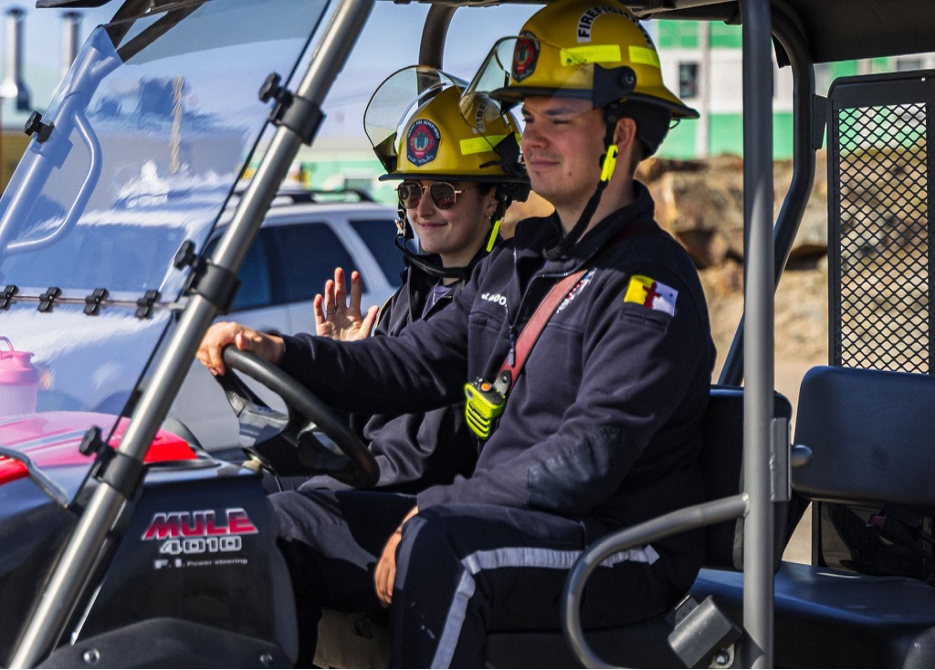
Firefighter crew patrolling race route for participants’ safety.
Despite the overall success, the team faced a few logistical challenges due to the limited weather window in Iqaluit. The race was scheduled in August on a day that, after reviewing regional weather patterns, appeared to be the most suitable. This constrained timeline left organizers with a limited preparation window, resulting in some prizes arriving only on the next working day, as the race fell on a weekend. Additionally, the free hoodies for participants ran out as more people than expected attended. According to Dr. Chris Begealawuh, head of the race organizing team at RLRI, these lessons have been carefully noted to improve planning and the participant experience for the next edition.
Overall, the Iqaluit Love and Unity Run showcased the power of community, culture, and wellness coming together in a single event. From inspiring participants and families to engaging volunteers and local organizations, the run left a lasting impression on everyone involved, strengthening collaboration between Real Life, the City of Iqaluit, and Nunavut Black History Society.
By Roselyn Ruvimbo, Research Associate